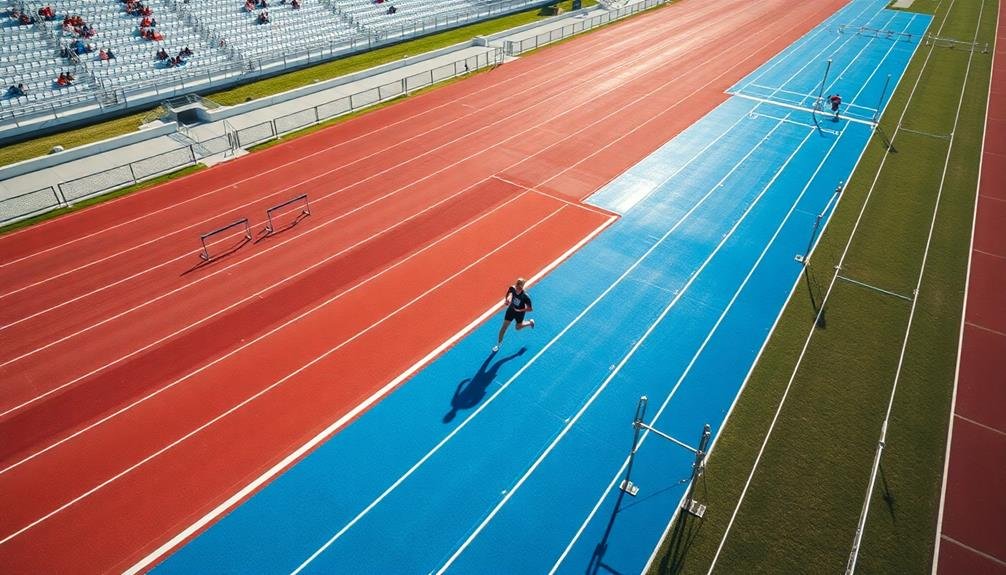
When filming track and field events with drones, you'll need high-quality equipment like the DJI Mavic 3 for stability and maneuverability. Prioritize safety by checking local regulations and maintaining visual line of sight. Perfect your aerial techniques with smooth flights at varying altitudes and angles. In post-production, organize clips, color correct, and add stabilization for professional results. Enhance the viewer experience by incorporating multiple camera angles, slow-motion replays, and on-screen graphics. Remember to capture ambient sounds for a richer audio experience. With these tips, you'll be on your way to creating stunning aerial coverage that brings track and field events to new heights.
Drone Equipment for Track Events

When it comes to filming track events with drones, you'll need the right equipment to capture stunning aerial footage. Start with a high-quality drone that offers stability and maneuverability. The DJI Mavic 3 or Autel EVO II Pro are excellent choices, providing 4K video capabilities and long flight times.
Equip your drone with a gimbal-stabilized camera to guarantee smooth footage, even in windy conditions. Look for models with adjustable frame rates and shutter speeds to capture fast-moving athletes clearly.
Don't forget to invest in multiple batteries, as track events can last for hours. For wider shots of the entire track, consider a drone with a wide-angle lens. If you're focusing on individual athletes, opt for a zoom lens to get closer without compromising safety regulations.
Make certain you have a reliable controller with a built-in screen or smartphone connection for live video feed. Finally, pack ND filters to manage bright sunlight and maintain proper exposure.
With this equipment, you'll be ready to capture breathtaking aerial footage of track events, providing viewers with a unique perspective on the action below.
Safety and Legal Considerations
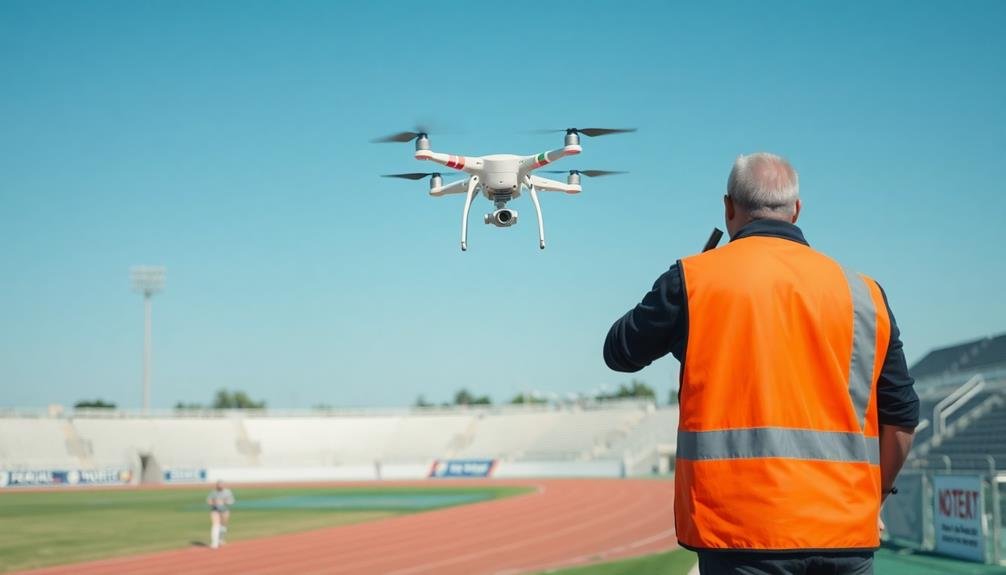
Before you take to the skies with your drone equipment, it's crucial to understand the safety and legal aspects of filming track events. First, check local regulations and obtain necessary permits for drone operations. Many areas require registration and licensing for commercial drone use. Familiarize yourself with no-fly zones and altitude restrictions near the event venue.
Always maintain visual line of sight with your drone and stay clear of spectators, athletes, and officials. Don't fly over crowds or active competition areas. Be aware of weather conditions that could affect flight stability, such as wind or rain. Implement fail-safe measures, including return-to-home functions and emergency landing protocols.
Respect privacy laws and obtain consent from event organizers and participants before filming. Some athletic associations have specific rules regarding drone usage during competitions. Verify your drone is equipped with obstacle avoidance technology and geofencing capabilities to prevent accidental intrusions into restricted areas.
Carry liability insurance to protect yourself in case of accidents or property damage. Stay updated on changing drone regulations and best practices in the industry.
Perfecting Aerial Shot Techniques

To perfect your aerial shot techniques for track and field events, you'll need to master a variety of drone maneuvers and camera settings.
Start by practicing smooth, steady flights at different altitudes to capture the entire field. Use GPS mode for stable hovering and waypoint missions for pre-planned flight paths.
Experiment with different camera angles, such as top-down views for race starts and finishes, and sweeping side shots for long jumps and javelin throws. Adjust your camera's settings for fast-moving subjects, using a high shutter speed (1/1000s or faster) and continuous autofocus mode.
For dynamic shots, try following athletes with your drone, maintaining a safe distance. Master the art of reveal shots by starting behind an object and slowly ascending to showcase the entire venue.
Use ND filters to control exposure in bright sunlight and achieve a cinematic look with slower shutter speeds.
Don't forget to capture establishing shots of the entire stadium or venue. These wide-angle views provide context and can be used as shifts between events.
Always prioritize safety and follow local regulations while perfecting your aerial cinematography skills.
Post-Production for Dynamic Footage
Transforming raw aerial footage into a compelling track and field video requires skillful post-production techniques.
You'll need to start by organizing your clips and selecting the best shots that showcase the event's energy and athleticism. Use color correction to enhance the vibrant hues of the track and athletes' uniforms, ensuring consistency across all footage.
Apply stabilization to smooth out any shaky drone shots, maintaining a professional look. Experiment with speed ramping to emphasize key moments, like a sprinter's burst from the starting blocks or a long jumper's landing. Incorporate slow-motion effects for dramatic impact during vital athletic feats.
Layer in multiple camera angles to provide a thorough view of the event, seamlessly shifting between aerial and ground-level shots. Add graphics and lower thirds to display athlete names, event information, and results.
Don't forget to include ambient sound and commentary to enhance the viewer's experience.
Enhancing Viewer Experience

Several key elements can greatly enhance the viewer experience when watching filmed track and field events.
You'll want to incorporate multiple camera angles to provide a thorough view of the action. Use wide shots to capture the entire field and close-ups to highlight individual athletes' expressions and techniques.
Don't forget to include aerial footage for a unique perspective that showcases the scale of the event.
Implement slow-motion replays for essential moments, allowing viewers to appreciate the athletes' form and skill in detail.
Add on-screen graphics to display real-time statistics, athlete information, and event records. This data helps viewers contextualize performances and stay engaged throughout the competition.
Consider utilizing split-screen technology to show simultaneous events or compare athletes side-by-side.
Enhance the audio experience by incorporating directional microphones to capture the sounds of the track, field, and crowd reactions.
Frequently Asked Questions
How Much Does It Cost to Hire a Drone Crew for Track Events?
You'll find drone crew costs for track events vary widely. You're looking at $500-$2,000 per day, depending on equipment quality, crew size, and duration. Don't forget to factor in insurance and permits for your event.
Can Drones Capture Indoor Track and Field Competitions Effectively?
Yes, you can use drones to capture indoor track and field competitions effectively. They're great for overhead shots and following athletes. However, you'll need to contemplate space limitations, safety regulations, and potential interference with equipment or spectators.
What Weather Conditions Are Too Extreme for Drone Filming of Track Events?
You'll find that strong winds, heavy rain, snow, and extreme temperatures can ground your drone during track events. Don't risk filming in thunderstorms or dense fog. Always prioritize safety and follow local regulations for drone operation.
How Do Athletes Feel About Being Filmed by Drones During Competitions?
You'll find athletes have mixed feelings about drone filming during competitions. Some enjoy the unique angles and publicity, while others worry about privacy or distraction. It's a topic that sparks debate among competitors and officials alike.
Are There Any Track and Field Records Set Using Drone Footage Verification?
You won't find any official track and field records verified solely by drone footage. While drones capture exciting aerial views, they're not yet used for official record verification. Traditional methods and ground-level cameras remain the standard for now.
In Summary
You've now got the tools to take your track and field coverage to new heights. With the right drone equipment, safety protocols, and filming techniques, you'll capture breathtaking aerial shots. Don't forget to polish your footage in post-production for maximum impact. As you soar above the action, you're not just filming events—you're revolutionizing how viewers experience track and field. Embrace this technology, and you'll elevate the sport to unprecedented levels of excitement and engagement.
As educators and advocates for responsible drone use, we’re committed to sharing our knowledge and expertise with aspiring aerial photographers.
Leave a Reply