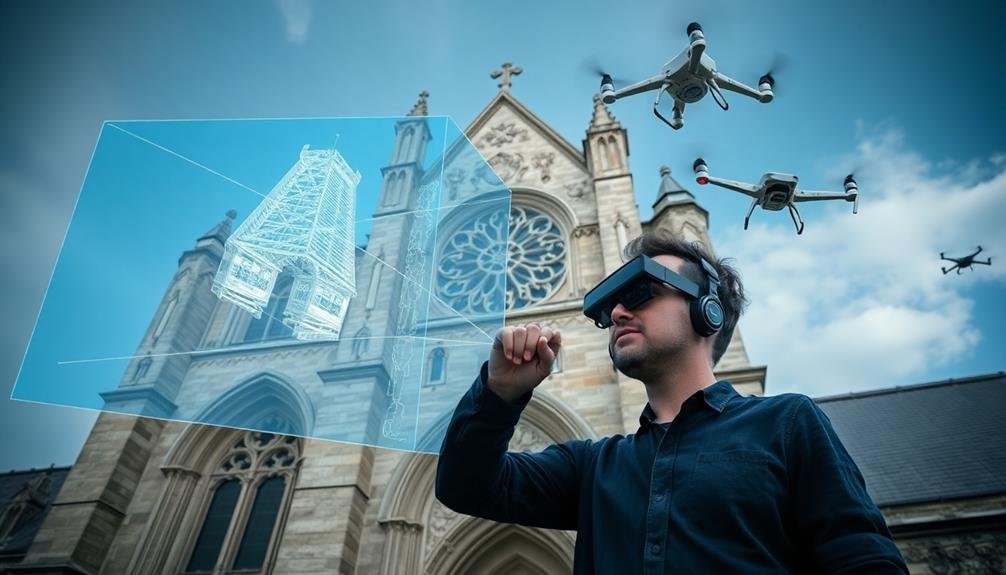
Modern imaging technologies have revolutionized historic building conservation in seven key ways. You'll find aerial documentation providing thorough views, 3D modeling enabling precise restoration planning, and thermal imaging revealing energy efficiency issues. These tools also allow for monitoring structural changes over time, creating virtual tours for public engagement, and taking precision measurements for accurate reconstruction. Additionally, they're invaluable for quick damage assessment after natural disasters. From drones capturing hard-to-reach areas to virtual simulations testing restoration approaches, these advancements offer preservationists unprecedented insights and capabilities. Exploring these innovations further will reveal the exciting future of heritage conservation.
Aerial Documentation of Building Conditions

Soaring above historic structures, drones and aerial photography have revolutionized the way we document building conditions. You'll find that these aerial tools provide unprecedented access to hard-to-reach areas, allowing you to capture high-resolution images of roofs, spires, and upper facades without the need for scaffolding or dangerous climbs.
With drones, you can quickly survey large sites, identifying potential issues like water damage, structural cracks, or deteriorating materials that might be missed from ground level.
You'll appreciate the ability to create 3D models and orthomosaic maps, giving you an all-encompassing view of the entire building and its surroundings.
Thermal imaging cameras mounted on drones let you detect hidden moisture problems or energy inefficiencies, helping you prioritize restoration efforts.
You can also use time-lapse photography to monitor gradual changes in a building's condition over months or years.
3D Modeling for Restoration Planning

3D modeling technology allows you to create highly accurate digital representations of historic buildings for restoration planning.
You'll gain precise structural assessments by examining detailed virtual models from every angle, identifying critical areas that need attention.
These digital models also enable you to run virtual restoration simulations, testing different approaches before committing to physical interventions on the actual building.
Precise Structural Assessment
Leveraging advanced technology, precise structural assessment through 3D modeling has become an invaluable tool in restoration planning for historic buildings. You'll find that these digital models provide a thorough view of a structure's condition, allowing you to identify areas of concern with remarkable accuracy.
By using laser scanning and photogrammetry, you can create highly detailed 3D representations of the building. These models reveal hidden structural issues, such as subtle deformations or weaknesses that might be missed during visual inspections.
You'll be able to analyze load-bearing capacities, assess the integrity of foundations, and pinpoint areas of material degradation. With this data, you can develop targeted restoration strategies, prioritizing interventions where they're most needed.
You'll also be able to simulate the effects of proposed changes, ensuring that restoration efforts don't compromise the building's structural integrity. This approach minimizes invasive procedures and helps preserve the building's historical authenticity.
Moreover, these 3D models serve as invaluable documentation, creating a digital archive of the building's current state. This record proves essential for future conservation efforts and historical research.
Virtual Restoration Simulations
Virtual restoration simulations take 3D modeling a step further, allowing you to explore and test various restoration approaches before physical work begins. These digital simulations provide a risk-free environment to experiment with different restoration techniques, materials, and design choices.
You'll be able to visualize the potential outcomes of your conservation efforts, helping you make informed decisions and avoid costly mistakes.
With virtual restoration, you can recreate missing or damaged elements of a historic building, evaluating how they might've looked originally. You'll have the ability to test different color schemes, textures, and architectural details, ensuring the final restoration aligns with the structure's historical integrity.
These simulations also allow you to assess the impact of proposed changes on the building's overall aesthetics and structural integrity.
Additionally, virtual restorations serve as valuable tools for stakeholder engagement and fundraising. You can present compelling visual representations of the proposed restoration to preserve and community members, helping to garner support and secure funding for your conservation project.
Thermal Imaging for Energy Efficiency

Thermal imaging has emerged as a powerful tool in the conservation of historic buildings, shedding light on energy efficiency issues that often go unnoticed.
You'll find this technology invaluable when evaluating the thermal performance of older structures. It allows you to visualize heat patterns, identifying areas of heat loss and poor insulation without invasive procedures.
When you use thermal cameras, you'll detect temperature variations across the building's facade and interior spaces.
This helps you pinpoint drafts, moisture issues, and thermal bridges that compromise energy efficiency. You can locate hidden structural elements, such as timber framing or blocked fireplaces, which affect heat distribution.
Monitoring Structural Changes Over Time
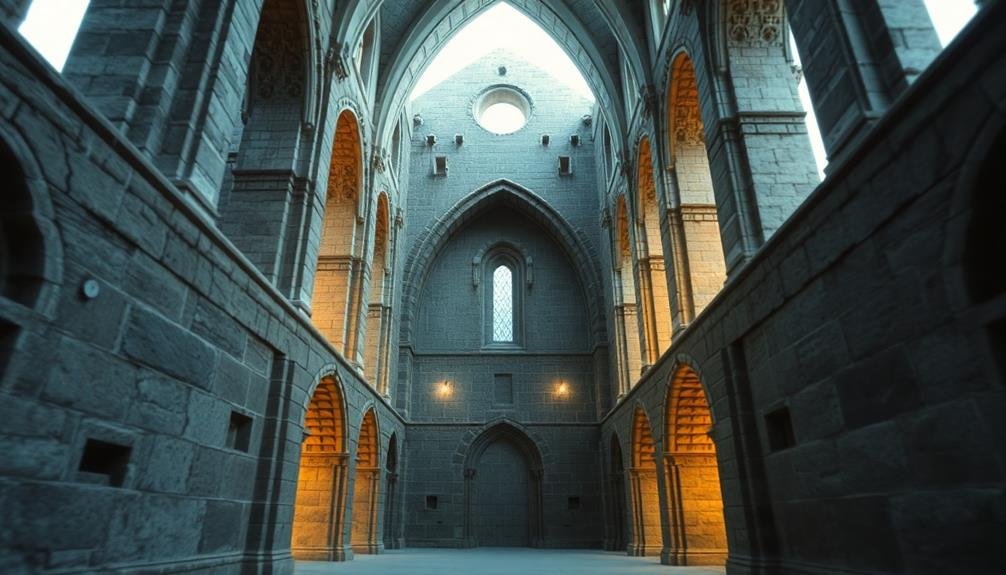
Imagery techniques have revolutionized the way we look at structural changes in historic buildings over time. You can now use advanced photogrammetry and 3D scanning to create highly accurate digital models of structures. These models serve as a baseline for future comparisons, allowing you to detect even minute shifts in the building's fabric.
By regularly capturing new imagery and comparing it to previous scans, you'll spot changes that might otherwise go unnoticed. This includes subtle foundation movements, wall bulges, or roof deformations. You can also use drone-mounted cameras to access hard-to-reach areas, providing a thorough view of the entire structure.
Time-lapse photography is another powerful tool at your disposal. By setting up cameras to take photos at regular intervals over months or years, you'll create visual records that clearly show gradual changes. This is particularly useful for monitoring the effects of environmental factors like weathering or vegetation growth.
These imaging techniques enable you to make data-driven decisions about conservation efforts, prioritize interventions, and document the building's evolution for future generations.
Virtual Tours for Public Engagement
Virtual tours of historic buildings offer unprecedented accessibility, allowing you to explore architectural wonders from anywhere in the world.
You'll find these digital experiences especially valuable if you have mobility limitations or live far from the sites.
Through interactive elements, you can engage with the building's history, zoom in on intricate details, and even participate in virtual restoration projects, enhancing your learning and appreciation of cultural heritage.
Accessibility for All
In light of recent technological advancements, virtual tours have emerged as a powerful tool for enhancing public engagement in historic building conservation. These digital experiences offer unprecedented accessibility for all, regardless of physical limitations or geographical constraints.
You'll find that virtual tours break down barriers, allowing people with mobility issues to explore historic sites they might otherwise never see. They're also invaluable for those who can't travel due to financial or time constraints. With just a few clicks, you can immerse yourself in detailed, 360-degree views of architectural wonders from around the world.
These tours often include features like audio descriptions and closed captions, making them accessible to those with hearing or visual impairments. You'll appreciate how they can be tailored to different learning styles and preferences, offering text, audio, and visual information simultaneously.
Moreover, virtual tours serve as a powerful preservation tool. They create a digital record of buildings as they exist today, helping conservationists track changes over time and plan future restoration efforts.
You're not just observing history; you're actively participating in its preservation for future generations.
Interactive Learning Experiences
Thanks to technological advancements, interactive learning experiences have revolutionized public engagement in historic building conservation. Virtual tours now allow you to explore historic sites from the comfort of your home, providing unprecedented access to cultural heritage. You can navigate through 3D reconstructions of buildings, zooming in on intricate details and examining architectural features up close.
These interactive platforms often include informative pop-ups, audio guides, and video content, enhancing your understanding of the site's history and conservation efforts. You'll find 360-degree panoramas that let you experience spaces as if you were there, complete with ambient sounds and atmospheric lighting.
Some virtual tours even incorporate augmented reality elements, allowing you to overlay historical images onto modern views or visualize proposed restoration work. You can participate in online workshops, join live-streamed conservation events, and contribute to crowdsourced preservation projects.
These interactive experiences not only educate but also foster a sense of ownership and responsibility for cultural heritage. By engaging with these digital tools, you're supporting conservation efforts and helping to guarantee that historic buildings remain relevant and appreciated in the digital age.
Precision Measurements for Accurate Reconstruction

Precise measurements lie at the heart of accurate historic building reconstruction. Modern imaging technologies have revolutionized this aspect of conservation work.
You'll find that photogrammetry and 3D scanning techniques now allow for incredibly detailed measurements of building features, down to millimeter accuracy. These tools create highly precise 3D models, capturing every curve, angle, and surface texture of historic structures.
With these advanced imaging methods, you're able to document a building's exact dimensions and proportions. This data proves invaluable when planning restoration work or creating replicas of damaged elements.
Laser scanning, for instance, can map an entire building's exterior and interior, providing a thorough set of measurements that would be nearly impossible to achieve manually.
You'll also benefit from the ability to take non-invasive measurements of fragile or hard-to-reach areas. Drones equipped with cameras can capture imagery of high roofs or towers, while thermal imaging can reveal hidden structural issues.
These precise measurements guarantee that any reconstruction or restoration work remains true to the original building's design and proportions, maintaining its historic integrity.
Damage Assessment After Natural Disasters
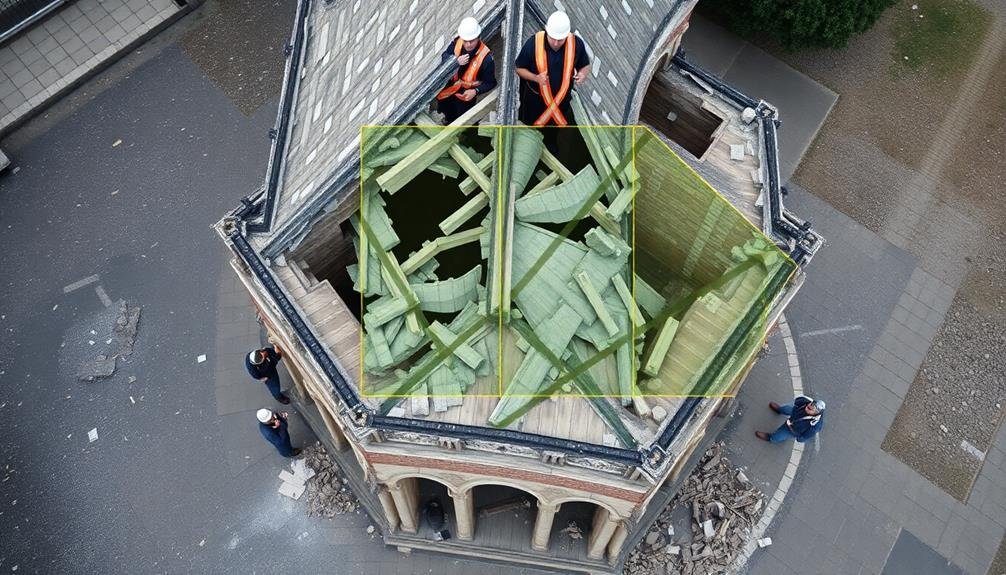
When natural disasters strike historic buildings, imagery plays an essential role in evaluating the damage. You'll find that aerial photography and satellite imagery provide a quick overview of affected areas, allowing conservationists to prioritize their efforts.
Drones equipped with high-resolution cameras can capture detailed images of hard-to-reach areas, revealing structural issues that might be invisible from the ground.
LiDAR technology creates precise 3D models of damaged buildings, helping you assess the extent of destruction and plan restoration efforts. These scans can be compared to pre-disaster imagery to identify even subtle changes in the structure.
Thermal imaging cameras detect hidden moisture damage, which is vital for preventing further deterioration and mold growth.
You'll also benefit from using photogrammetry to create accurate 3D models from multiple 2D images. This technique allows for virtual walkthroughs of damaged sites, enabling remote assessment by experts worldwide.
Additionally, multispectral imaging can reveal underlying damage to materials not visible to the naked eye, such as weakened masonry or compromised foundations.
Frequently Asked Questions
How Does Imagery Technology Impact the Cost of Historic Building Conservation?
You'll find imagery technology considerably reduces conservation costs. It allows for precise damage assessment, efficient planning, and virtual simulations. You can avoid unnecessary work, optimize resource allocation, and streamline the entire restoration process, saving time and money.
What Training Is Required for Conservators to Use Advanced Imaging Techniques?
You'll need specialized training in advanced imaging tools and software. It's essential to learn about photogrammetry, 3D scanning, and thermal imaging. You should also understand data interpretation and how to integrate imagery into conservation plans.
Can Imagery Techniques Replace Traditional Methods of Building Inspection Entirely?
You can't entirely replace traditional building inspections with imagery techniques. While they're incredibly useful, you'll still need hands-on assessments. Imagery complements traditional methods, enhancing accuracy and efficiency, but can't capture everything a physical inspection does.
How Is Data Security Ensured When Storing Digital Imagery of Historic Buildings?
You'll need robust data encryption and secure cloud storage to protect digital imagery of historic buildings. It's essential you implement access controls, regular backups, and comply with data protection regulations to safeguard this valuable information.
What Are the Limitations of Imagery Technology in Historic Building Conservation?
You'll find that imagery technology has its limits in historic building conservation. It can't capture hidden structural issues, may miss subtle surface details, and doesn't replace hands-on inspection. It's also dependent on equipment quality and operator skill.
In Summary
You've seen how imagery transforms historic building conservation. From aerial surveys to 3D models, you're now equipped with powerful tools. You'll diagnose issues faster, plan restorations better, and engage the public more effectively. You're not just preserving buildings; you're bringing history to life. Embrace these technologies, and you'll revolutionize your approach to conservation. The future of historic preservation is in your hands – it's visual, it's precise, and it's exciting.

As educators and advocates for responsible drone use, we’re committed to sharing our knowledge and expertise with aspiring aerial photographers.
Leave a Reply