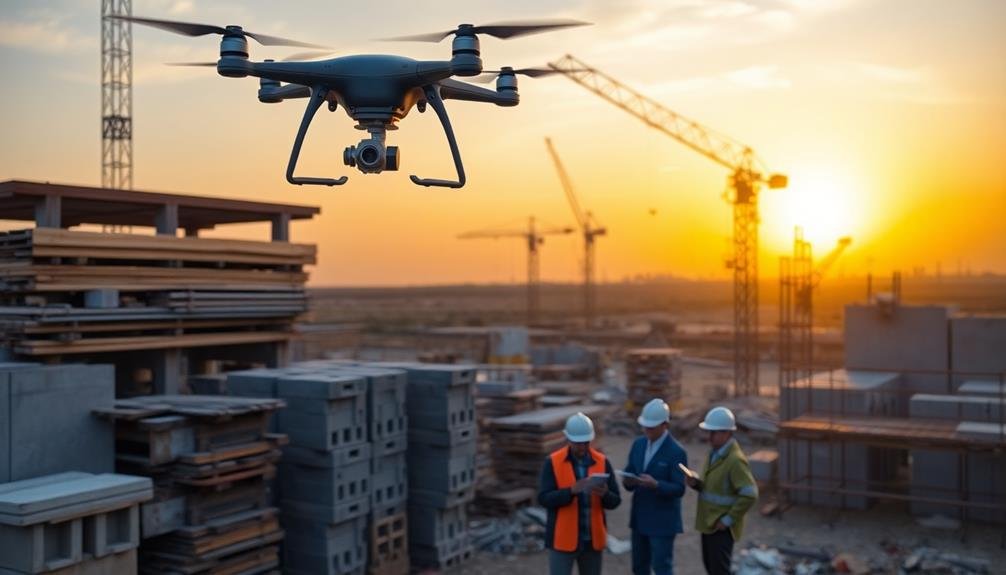
Drones are transforming how you manage construction materials on-site. They'll provide real-time, accurate data on your inventory through high-resolution cameras and 3D mapping. You'll save time and money by automating tedious manual counting processes and reducing errors. With drones, you can easily track stockpiles, detect quality issues, and improve safety by accessing hard-to-reach areas. They integrate seamlessly with inventory management systems, allowing for quick decision-making and optimized procurement. You'll see significant improvements in efficiency, cost savings, and overall productivity. The future of construction material management is taking flight, and there's much more to explore in this aerial revolution.
Current Challenges in Material Management
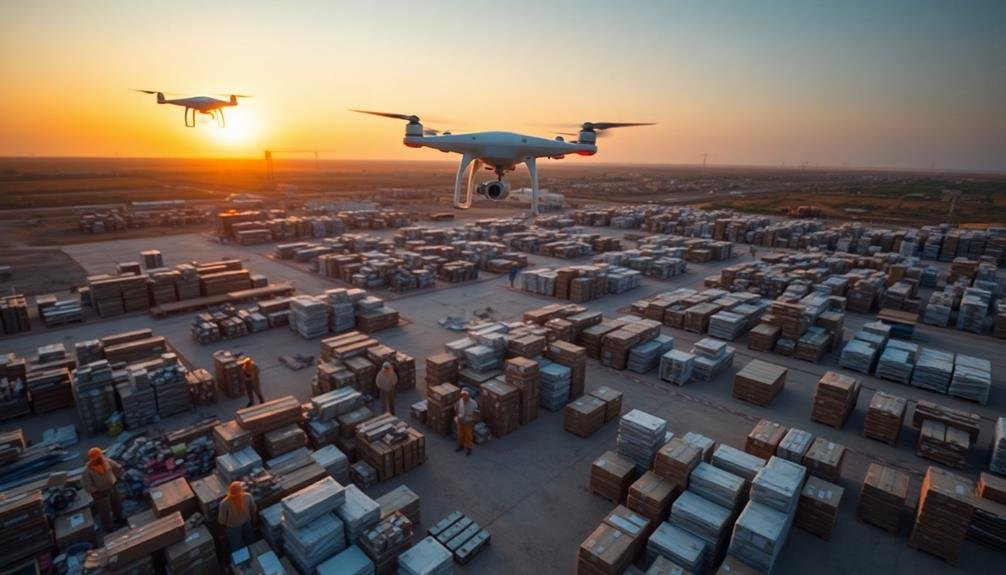
Chaos reigns on many construction sites when it comes to material management. You'll often find project managers struggling to keep track of inventory, leading to costly delays and inefficiencies. Traditional methods of manual counting and spreadsheet tracking are time-consuming and prone to errors.
You're likely to encounter discrepancies between reported and actual stock levels, resulting in overordering or shortages that can derail your project timeline.
Safety concerns arise when you're dealing with large stockpiles of materials. It's challenging to assess hard-to-reach areas, potentially missing critical information about material conditions or placement.
You'll face difficulties in accurately estimating quantities for bulk materials like gravel or sand, leading to procurement issues.
Theft and unauthorized use of materials are persistent problems you'll need to address. Without real-time monitoring, it's easy for resources to disappear unnoticed.
You'll also struggle with optimizing material flow and placement, often resulting in congested work areas and reduced productivity. Weather can complicate matters further, as you'll need to protect sensitive materials while maintaining accessibility.
These challenges highlight the need for more efficient, accurate, and technologically advanced material management solutions in construction.
Drone Technology for Inventory Tracking
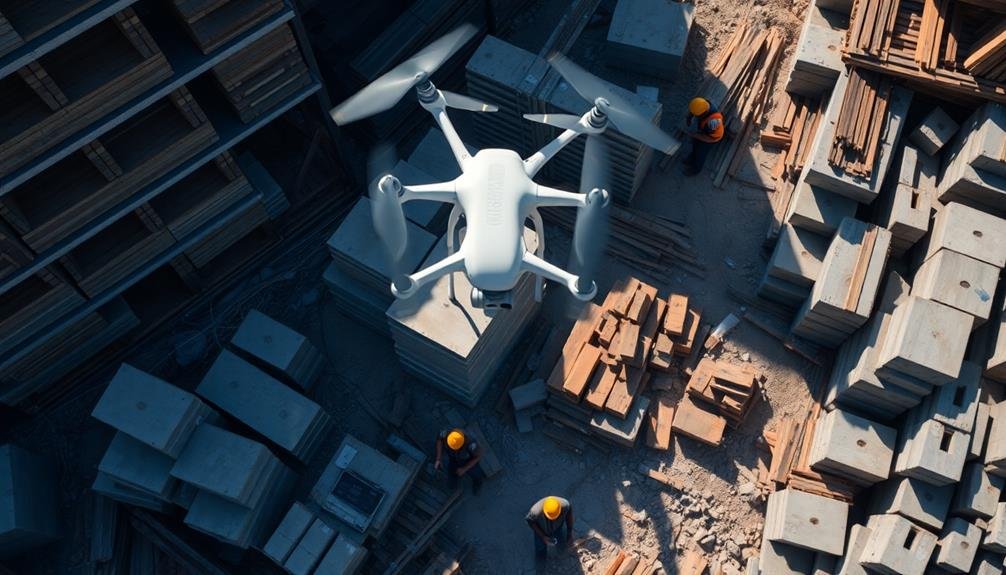
Soaring above construction sites, drones are revolutionizing inventory tracking in the industry. You'll find these unmanned aerial vehicles equipped with high-resolution cameras and sensors, capturing real-time data on material quantities and locations. They're eliminating the need for time-consuming manual counts and reducing human error.
You can use drones to conduct regular flyovers, creating detailed 3D maps of your site. These maps allow you to track changes in stockpiles, identify misplaced materials, and monitor usage rates. You'll also benefit from improved safety, as drones can access hard-to-reach areas without putting workers at risk.
Here's a quick overview of drone capabilities for inventory tracking:
| Feature | Benefit |
|---|---|
| Real-time imaging | Instant updates on material locations |
| 3D mapping | Accurate volume measurements of stockpiles |
| GPS tracking | Precise positioning of materials on site |
| Data integration | Seamless sync with inventory management systems |
Benefits of Aerial Inventory Monitoring
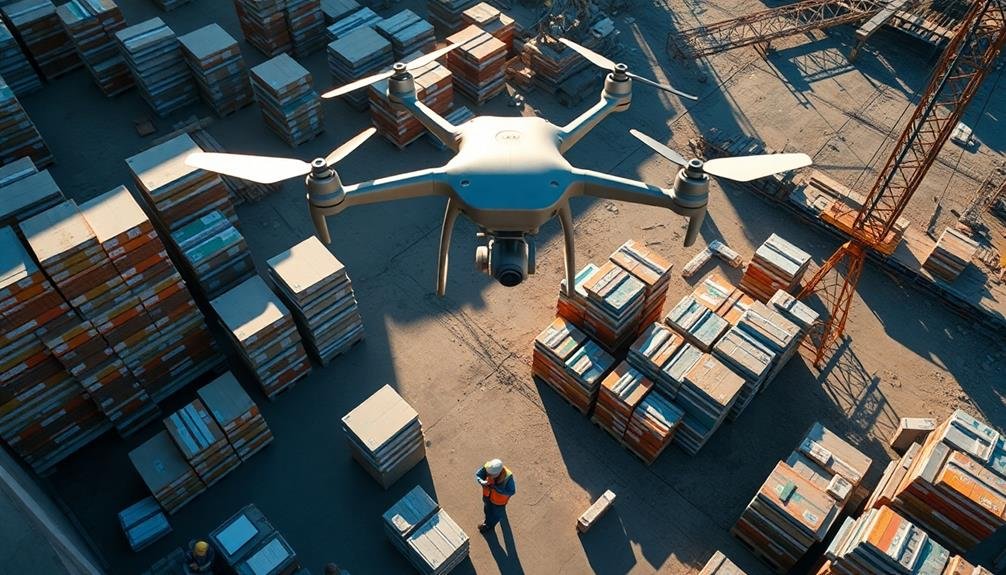
You'll find that aerial inventory monitoring offers significant advantages in construction management.
Through drone technology, you're able to achieve improved accuracy and efficiency in tracking materials and equipment across your job sites.
You can collect real-time data on inventory levels, locations, and movements, allowing for more informed decision-making and streamlined operations.
Improved Accuracy and Efficiency
Drones have revolutionized aerial inventory monitoring in construction, greatly improving accuracy and efficiency. You'll find that these unmanned aerial vehicles can quickly survey large areas, providing real-time data on material quantities and locations. This speed allows for more frequent inventory checks, reducing the risk of stockouts or overstock situations.
With drone technology, you're able to access hard-to-reach areas safely, eliminating the need for manual inspections that can be time-consuming and potentially dangerous. The high-resolution imagery captured by drones enables precise measurements and counts, minimizing human error in inventory assessments.
You'll also benefit from the integration of drone data with inventory management software. This combination automates the process of updating stock levels, generating reports, and identifying discrepancies. As a result, you can make more informed decisions about material ordering and allocation.
Moreover, drones equipped with thermal imaging can detect temperature variations in stored materials, helping you identify potential quality issues or safety hazards. This proactive approach to inventory management enhances overall site safety and reduces the likelihood of material waste or damage.
Real-Time Data Collection
Real-time data collection stands as a cornerstone benefit of aerial inventory monitoring with drones. You'll find that these unmanned aerial vehicles can quickly capture and transmit information about your construction site's material inventory, giving you an up-to-the-minute view of your resources.
With drones, you're no longer relying on manual counts or outdated reports. Instead, you're getting accurate, current data that helps you make informed decisions. You can track the movement of materials, identify shortages before they become critical, and optimize your supply chain.
Drones equipped with high-resolution cameras and sensors can scan large areas in minutes, providing you with detailed imagery and measurements. This data is often processed on-board and transmitted directly to your project management software, allowing for immediate analysis and action.
You'll appreciate the ability to monitor multiple sites simultaneously, reducing travel time and increasing overall efficiency.
Real-time data also helps you detect discrepancies between delivered and ordered materials, prevent theft, and manage waste more effectively.
Implementing Drone-Based Inventory Systems
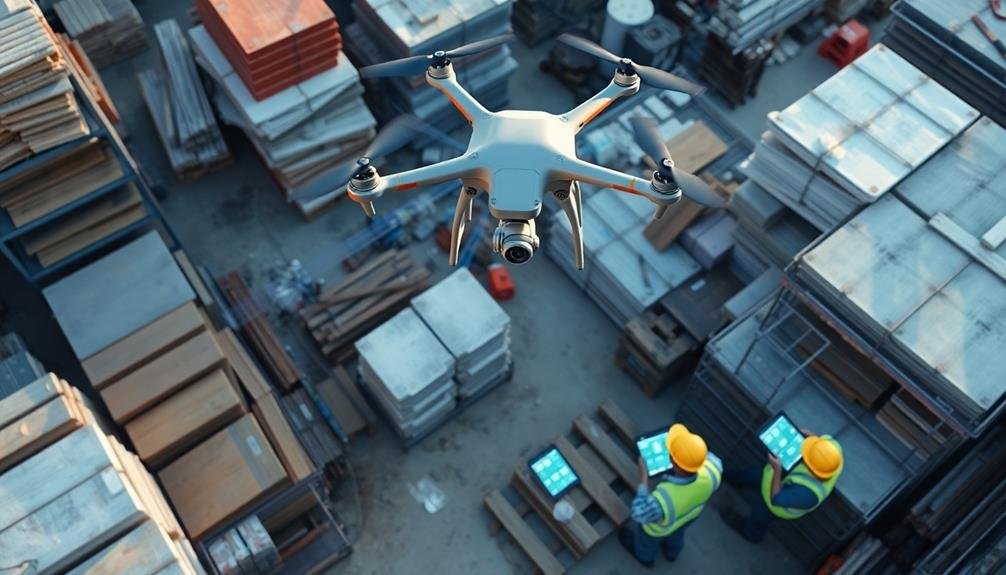
How can construction managers revolutionize their inventory management? By implementing drone-based inventory systems, you'll streamline operations and boost efficiency. These systems use drones equipped with cameras and sensors to scan and track materials on your construction site.
To implement a drone-based inventory system, you'll need to:
- Choose the right drone and software
- Train your team on drone operation and data interpretation
- Establish flight paths and scanning schedules
- Integrate the drone data with your existing inventory management system
You'll find that drone-based inventory systems offer numerous benefits. They'll save you time by automating the counting process, reducing the need for manual labor.
You'll also improve accuracy, as drones can access hard-to-reach areas and provide a bird's-eye view of your entire site. Real-time data collection allows you to make informed decisions quickly, preventing stockouts and overorders.
Data Analysis and Reporting
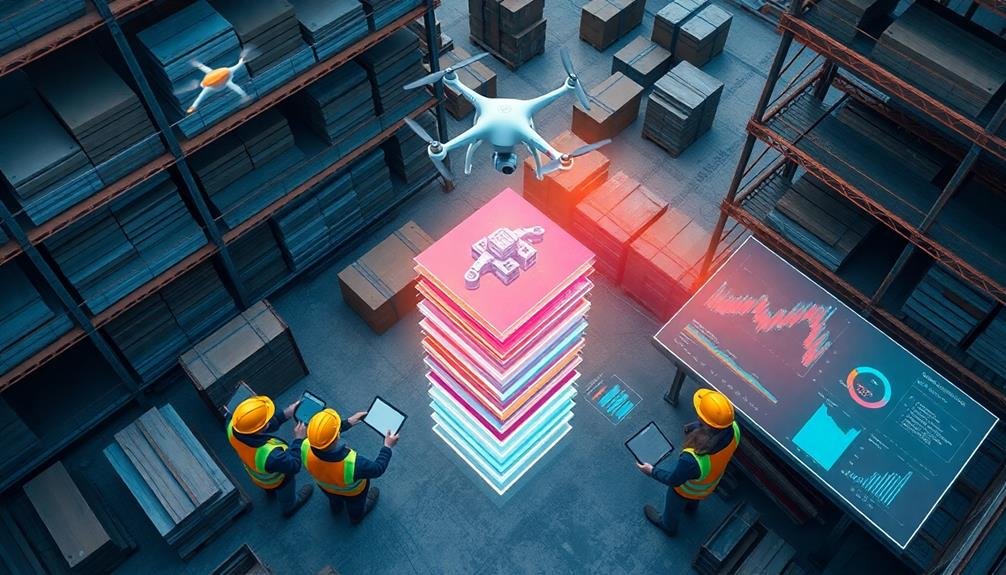
Data-driven decision-making is at the heart of effective drone-based inventory management. Once you've collected aerial imagery and data from your drone flights, you'll need to analyze and interpret this information to gain actionable insights.
Start by using specialized software to process the raw data, converting it into 3D models, orthomosaic maps, and volumetric measurements. You'll want to focus on key metrics such as material quantities, stockpile volumes, and consumption rates. These insights will help you optimize your inventory levels, reduce waste, and improve procurement efficiency.
Don't forget to compare current data with historical records to identify trends and patterns in material usage. When it comes to reporting, you'll need to present your findings in a clear, concise manner.
Create visual dashboards that highlight critical information at a glance, using charts, graphs, and heat maps to illustrate inventory levels and distribution across your construction site. You should also generate regular reports that summarize inventory status, flag potential shortages or overstock situations, and provide recommendations for optimizing material management.
Cost Savings and Efficiency Gains
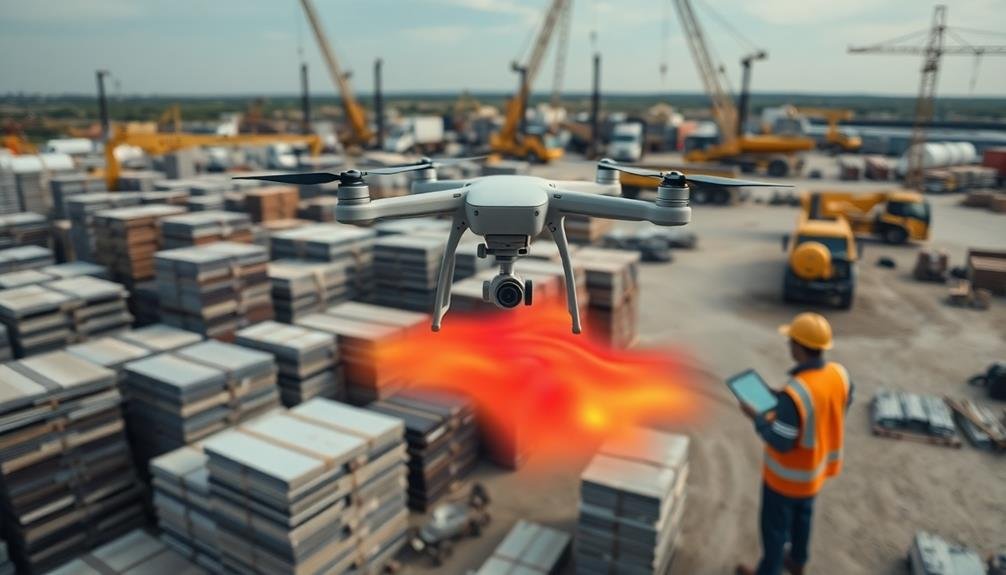
The implementation of drone technology in construction inventory management leads to significant cost savings and efficiency gains.
You'll find that drones can dramatically reduce the time and labor required for inventory checks, allowing you to allocate resources more effectively. By automating the process, you'll minimize human error and improve accuracy in your stock assessments.
Drones offer several key benefits that contribute to cost savings and increased efficiency:
- Reduced labor costs: You'll need fewer staff members to conduct inventory checks, as drones can cover large areas quickly.
- Improved safety: Your workers won't have to climb stockpiles or navigate potentially hazardous areas to assess inventory levels.
- Faster data collection: You'll receive real-time information, enabling quicker decision-making and more responsive inventory management.
- Increased accuracy: Drone-captured data is more precise than manual measurements, helping you avoid overstock or understock situations.
Safety Improvements on Construction Sites
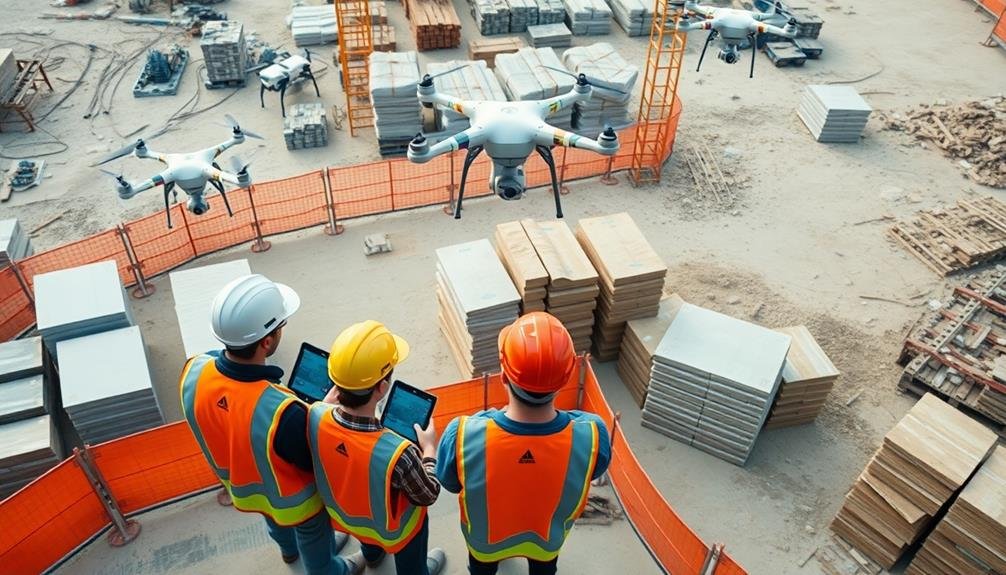
You'll find that drones greatly enhance safety on construction sites through improved hazard detection and monitoring.
By using drones to inspect high-risk areas, you can identify potential dangers before workers are exposed to them.
This technology allows you to reduce worker exposure to hazardous situations, ultimately creating a safer work environment.
Hazard Detection and Monitoring
Sentinels of safety, drones have revolutionized hazard detection and monitoring on construction sites.
You'll find these aerial assistants tirelessly scanning for potential dangers, providing real-time data to project managers and safety officers. They're equipped with high-resolution cameras and sensors that can identify risks often overlooked by human inspectors.
You can leverage drones for:
- Thermal imaging to detect electrical hotspots or potential fire hazards
- Air quality monitoring to measure dust levels and harmful gases
- Structural integrity assessments to identify weak points or instabilities
- Perimeter security checks to guarantee site boundaries are secure
Reduced Worker Exposure
With drones taking on high-risk tasks, construction sites have seen a significant reduction in worker exposure to dangerous situations.
You'll find that drones can now perform inspections of tall structures, unstable terrain, and hazardous areas, keeping your workers safely on the ground. They're able to access confined spaces, inspect rooftops, and monitor hard-to-reach locations without putting human lives at risk.
You'll notice a decrease in accidents related to falls, as drones can now handle tasks that previously required workers to climb scaffolding or use lifts. They're also effective in monitoring air quality and detecting gas leaks, reducing your team's exposure to harmful substances.
By using drones for surveying and mapping, you'll minimize the need for workers to traverse potentially dangerous terrain.
In emergency situations, drones can quickly assess the scene and provide vital information without endangering first responders.
You'll appreciate how they can monitor ongoing work in real-time, allowing you to identify and address safety concerns promptly.
Future Developments in Drone Inventory
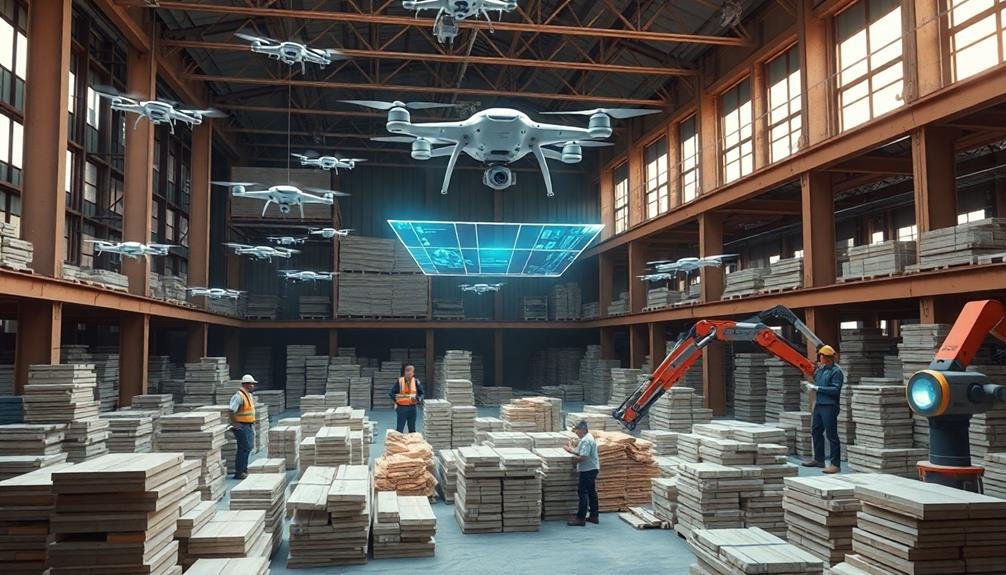
Frequently, the construction industry witnesses rapid technological advancements, and drone inventory is no exception. As you look to the future, you'll see drones becoming even more integral to construction material management. You can expect improved accuracy, speed, and functionality in drone-based inventory systems.
Here are four key developments you'll likely encounter:
- AI-powered image recognition: You'll see drones equipped with advanced AI that can instantly identify and categorize materials, reducing human error and processing time.
- Real-time inventory updates: Your inventory management system will receive immediate updates as drones conduct surveys, allowing for just-in-time ordering and reducing storage costs.
- Integration with BIM: You'll witness seamless integration between drone data and Building Information Modeling (BIM) systems, enhancing project planning and execution.
- Autonomous operations: You can anticipate fully autonomous drones that conduct regular inventory checks without human intervention, freeing up your team for other tasks.
These advancements will revolutionize how you manage construction materials. You'll experience increased efficiency, reduced costs, and improved project outcomes as drone technology continues to evolve.
Stay informed about these developments to maintain a competitive edge in the construction industry.
Frequently Asked Questions
Are There Regulations Limiting Drone Use for Construction Inventory Management?
Yes, there are regulations limiting drone use for construction inventory management. You'll need to comply with FAA rules, local laws, and privacy regulations. It's essential to obtain proper certifications and adhere to airspace restrictions when operating drones.
How Do Weather Conditions Affect Drone Inventory Operations?
You'll find weather impacts drone inventory operations considerably. Wind can disrupt flight, rain may damage sensors, and extreme temperatures affect battery life. You shouldn't fly in storms or heavy fog for safety and accuracy reasons.
What Training Is Required for Operating Drones in Construction Settings?
You'll need a Part 107 FAA certification to fly drones commercially. Training covers drone operation, safety protocols, and regulations. You'll also learn construction-specific applications, such as inventory management and site surveying. On-site practice is essential too.
Can Drones Integrate With Existing Inventory Management Software Systems?
Yes, you'll find that drones can easily integrate with your existing inventory management software. They'll capture data and sync it directly, streamlining your processes. You'll enjoy real-time updates and improved accuracy in your inventory tracking systems.
How Do Drones Handle Inventory in Indoor or Covered Storage Areas?
You'll find drones equipped with specialized sensors for indoor navigation. They'll use technologies like LiDAR, infrared, or visual positioning to maneuver in confined spaces. They can scan barcodes, count items, and relay data to your inventory system.
In Summary
You're witnessing a revolution in construction material management. By embracing drone technology, you'll streamline inventory processes, boost efficiency, and enhance safety on your sites. As you implement these aerial systems, you'll see significant cost savings and improved accuracy in your data. Don't hesitate to adopt this innovative approach. The future of inventory management is airborne, and it's time for you to take flight with drones.

As educators and advocates for responsible drone use, we’re committed to sharing our knowledge and expertise with aspiring aerial photographers.

Leave a Reply